
EPR Registration in India: Process, Compliance Guide & Portal Filing
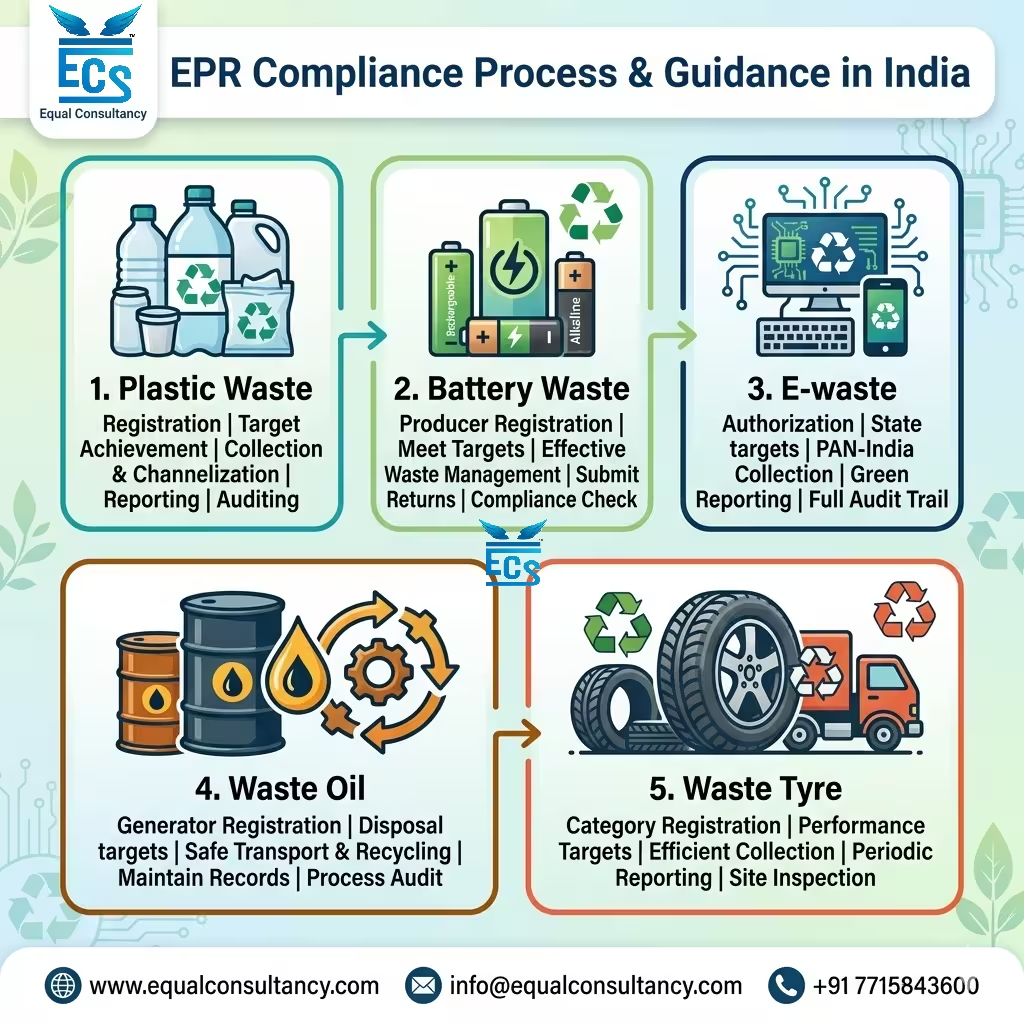
What is Extended Producer Responsibility (EPR) in India?
Extended Producer Responsibility (EPR) is an environmental policy approach mandated by the Ministry of Environment, Forest and Climate Change (MoEFCC) and executed through the Central Pollution Control Board (CPCB). It places the post-consumer lifecycle management of products directly upon the entities that introduce them into the Indian market.
Under Indian environmental statutes, entities classified as PIBOs (Producers, Importers, Brand Owners, and Recyclers) are legally required to institute environmentally sound collection, channelization, recycling, and end-of-life disposal systems for their waste footprint.
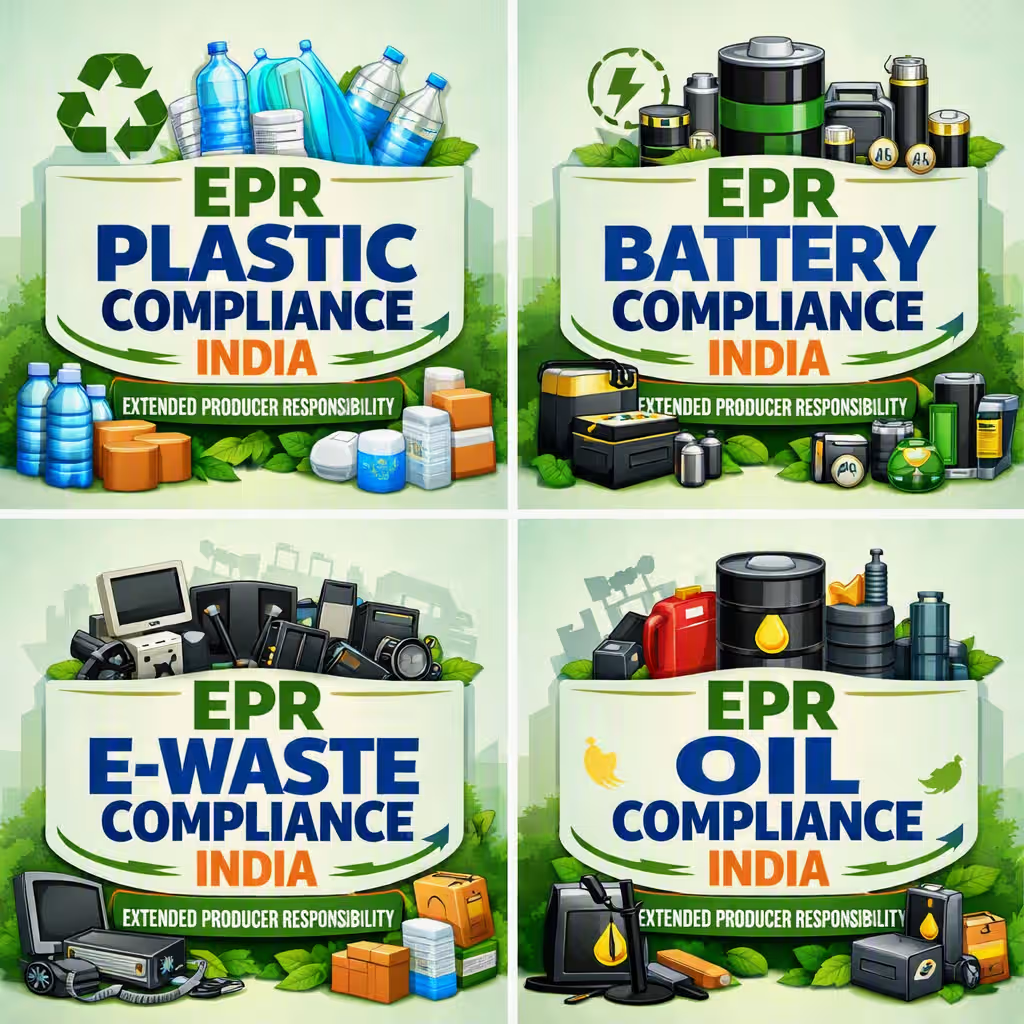
The 4 Key EPR Categories Regulated in India
Equal Consultancy provides specialized legal and liaison support across all four centralized EPR domains established by the Indian Government:
 1. Plastic Waste Management (PWM)
Governed under Plastic Waste Management Rules (amended). Regulates 4 distinct categories: Rigid Plastics (Cat I), Flexible single/multi-layer (Cat II), Multi-layered plastic packaging (Cat III), and Compostable plastic packaging (Cat IV).
 2. E-Waste (Management) Rules
Applies to electrical and electronic equipment (EEE) across IT, telecommunications, consumer electronics, and large appliances. Mandates annual collection targets and safe dismantling.
 3. Battery Waste Management (BWMR)
Encompasses Lead-Acid batteries, Lithium-Ion batteries, Automotive batteries, and Industrial storage cells. Imposes mandatory recovery percentages for critical metals like Lithium, Cobalt, and Nickel.
 4. Waste Tyre Management
Regulates new and retreaded tyre manufacturers and importers. Mandates credit-based redemption from registered tyre recyclers (Pyrolysis oil, reclaimed rubber, or crumb rubber).
Who Requires Mandatory EPR Registration?
If your enterprise engages in any of the following commercial activities, EPR registration on the centralized CPCB portal is mandatory before initiating sales or port clearance:
- Importers: Any business importing commercial shipments containing packaged consumer goods, electronic equipment, standalone batteries, or automotive tyres into Indian customs territory.
- Producers / Manufacturers: Factories producing virgin or recycled raw materials, packaging films, electronic goods, or batteries.
- Brand Owners: Companies marketing packaged products or appliances under their proprietary registered brand name or trademark in India.
- Waste Processors & Recyclers: Units holding SPCB consent to operate, authorized to generate EPR certificates and transfer digital credits to PIBOs.
Step-by-Step EPR Registration Process on the CPCB Portal
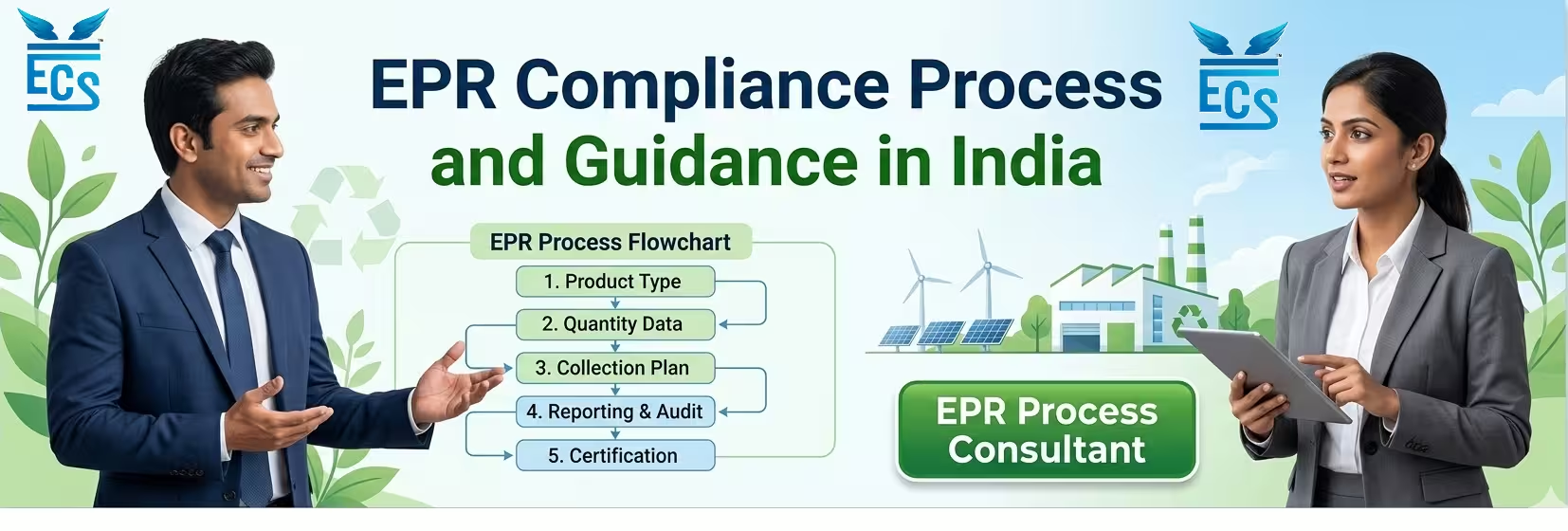
Navigating the centralized CPCB portal requires meticulous data entry, material characterization, and statutory verification. Follow this structured roadmap implemented by Equal Consultancy:
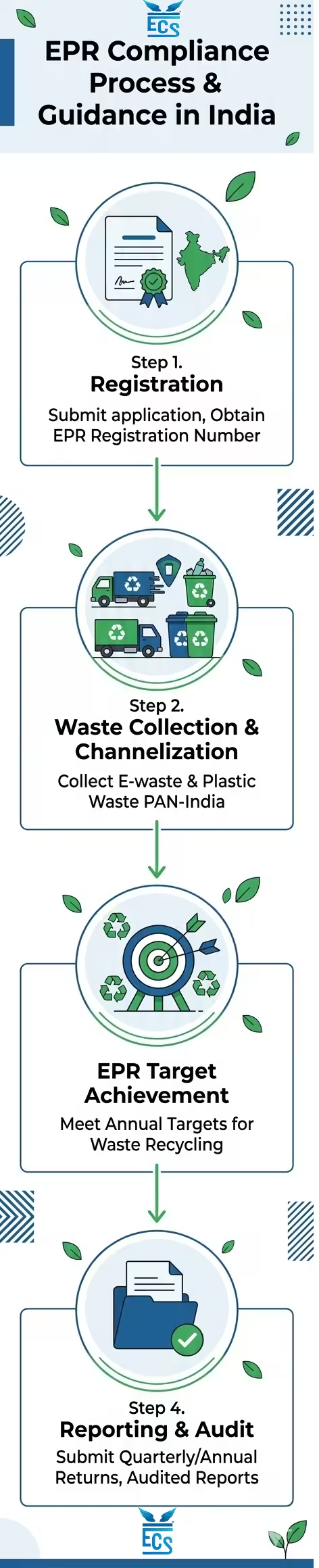
- Entity Categorization & Scope Assessment: Define your exact PIBO classification and quantify past multi-year sales and import volume to determine your specific recycling target brackets.
- Document Preparation & Verification: Compile essential corporate, tax, and environmental permits (IEC code, GSTIN, PAN, SPCB Consent to Operate/Establish, and manufacturing licenses).
- CPCB Portal User Profile Generation: Create an official organizational profile on the centralized portal (Plastic, E-waste, Battery, or Tyre portal) with dual-factor Aadhaar authentication of the authorized representative.
- Data Upload & Mass Balance Accounting: Enter SKU-wise product dimensions, net plastic/metal content weight, and state-wise distribution matrices.
- Statutory Application Fee Submission: Calculate and pay the government processing fee directly via the Bharatkosh / CPCB integrated payment gateway based on annual tonnage.
- Departmental Query Resolution & Approval: Address technical clarifications raised by CPCB verification officers. Once approved, the system generates the formal EPR Registration Certificate bearing a unique registration number.
Mandatory Document Checklist for EPR Registration
| Document Type | Required For | Key Compliance Elements |
|---|---|---|
| Import Export Code (IEC) | Importers Only | Must reflect current active corporate address matching GST. |
| GST & PAN Card | All Entities | Entity proof for company, partners, or proprietorship. |
| Company Incorporation Certificate | Corporates & LLPs | MCA Certificate of Incorporation / Partnership Deed. |
| CTE / CTO (SPCB Consent) | Producers & Recyclers | Valid Consent to Establish/Operate from State Pollution Control Board. |
| Authorized Signatory Declaration | All Entities | Board Resolution or Power of Attorney with Aadhaar KYC. |
| Material Mass Balance Sheet | All PIBOs | Chartered Engineer / CA certified product breakdown by weight and category. |
Post-Registration Obligations: Returns & Credit Fulfillment
Acquiring the EPR certificate is only the initial step. Ongoing statutory obligations include:
- Annual Returns Filing: Submitting audited figures of actual imported/manufactured product quantities on the portal by June 30th every financial year.
- EPR Certificate / Credit Procurement: Purchasing authenticated recycling certificates from CPCB-registered recyclers through portal-backed transactions to offset annual liability.
- Audit Trail Maintenance: Maintaining complete traceability records for 5 years to verify mass-balance audits conducted by regional CPCB inspection wings.
Need Complete EPR Registration & Credit Procurement Assistance?
Avoid bureaucratic delays and non-compliance penalties. Equal Consultancy provides end-to-end liaison, documentation, CPCB portal filing, and verified EPR credit procurement across India.
Book a Free Compliance ConsultationWhy Choose Equal Consultancy for Your EPR Compliance?
At Equal Consultancy, we bridge the gap between complex regulatory mandates and frictionless business continuity:
Our regulatory advisors pre-audit documentation to ensure zero portal rejections or prolonged officer queries.
Seamless access to legitimate, CPCB-registered recycling partners to acquire verified EPR credits at competitive market rates.
From initial registration to annual filings and show-cause notice resolution, your business stays insulated from Environmental Compensation penalties.
Frequently Asked Questions (FAQs)
Who is required to obtain EPR Registration in India?
Producers, Importers, Brand Owners (PIBOs), and Manufacturers of plastic packaging, electrical/electronic equipment (EEE), industrial/EV batteries, and waste tyres must obtain an EPR registration before distributing or clearing goods through Indian customs.
What is the penalty for non-compliance with EPR rules in India?
Under the Environment (Protection) Act, CPCB and SPCBs levy substantial Environmental Compensation (EC) charges for non-compliance, unfulfilled recycling liabilities, or operating without registration. Continued default may trigger customs holds and business suspension.
How long does it take to secure a CPCB EPR certificate?
With complete and accurate documentation prepared by Equal Consultancy, EPR registration typically takes between 15 to 30 working days from the date of submission on the centralized portal.
Can Equal Consultancy assist with purchasing EPR recycling certificates/credits?
Yes. Equal Consultancy connects you with vetted, accredited recyclers on the CPCB portal to safely purchase verified EPR credits to fulfill your mandated annual recycling targets seamlessly.